Hazard - Chapter 5 - Human Societies
Stability and highmindedness do not guarantee survival; they are mechanical traps that accelerate collapse. True human vitality and spontaneous association only emerge when we drop the illusion of calculated safety and step directly into the unpredictable friction of hazard.
Audio recorded from Speechify. Voice John (British)
At a glance
The Mechanics of Societal Hazard
- The Hazard of Power and Space: The mechanical pursuit of dominance is a trap. The larger the area of control and the greater the concentration of power, the more problems are attracted. Every doubling of strength essentially quadruples the area of friction, guaranteeing a sudden collapse the moment the hazards exceed the system's capacity to master them.
- The Trap of Stability: A society or organisation that has eliminated friction through good administration and heavy regulation is mathematically marked for death. Without the engine of inner purpose and the necessity of inner growth, a purely stable environment will inevitably collapse from the inside out.
- The Toxicity of Highmindedness: Noble aims and high ideals are not a substitute for vitality. When groups or societies are founded purely on good intentions—without being forced to face raw, difficult dangers—they routinely degenerate, ultimately producing the exact opposite of their founders' intentions.
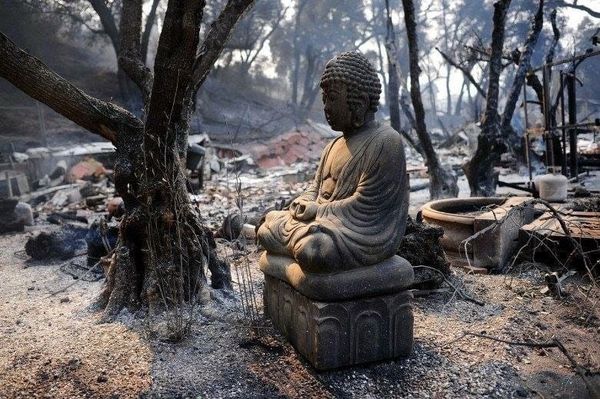
- The Crucible of Solioonensius (Concentrated Hazard): Periods of massive, polarized tension and systemic breakdown are not merely disasters; they are extraordinary concentrations of opportunity. When the map burns, it provides the precise conditions necessary for a deliberate group of people to step into the uncertainty and create something genuinely vital.
- Spontaneous Association vs. Institutional Decay: True human connection and capability arise spontaneously when facing an immediate, unpredictable hazard together (like pulling neighbours from a bombed building). The fatal error occurs when the intellect tries to institutionalise and mechanically perpetuate that relationship after the localized need has passed.
This framework explicitly exposes the extractive gears of organisations that attempt to calculate away uncertainty.